Simple Present Tense (Fiil Cümlesi)

Yine geldik aynı yere!
Her İngilizce dersinde ilk anlatılan konu olması sebebiyle muhtemelen bir çok kişinin antipatisini toplamış bir başlık olduğunu düşünüyorum, ancak dil kitaplarında bu konuyu seçilmesi boşuna değil. Türkçede geniş zamana denk gelen bu yapı İngilizce cümle kullanımında ciddi geniş bir yelpazeye sahip. Bir de kelime ve yapı olaylarını fazla karıştırmadan yapılabiliyor olması önemli bir sebep.
Öncelikle belirtmeliyim ki bu zamanın fiil ve isim cümlesi olmak üzere iki farklı türü var. İsim cümlesi olanlar (am/is/are) ile kuruluyor. Ancak bu yazıda biz fiil cümlesini ele alıyoruz. Bu zaman kipi (tense) ile de genel anlamda düzenli bir şekilde yaptığımız/yapılan, şeylerden bahsetmek için kullanıyor olacağız.
Simple Present Tense Nasıl Kullanılır?
Olumlu
I work.
You work.
He/ She/ It works.
We work.
You work.
They work.
Cümlede özneden sonra (I, you, we, he, she, it) fiil eklenir (bu örnekte fiil work). Eğer özne üçüncü tekil şahıs ise (he, she, it), başka bir deyişle dedikodu yapıyorsak fiile “s” takısı eklenir. (He works/ O çalışır.)
Olumsuz
I don’t work.
You don’t work.
He / She / It doesn’t work.
We don’t work.
You don’t work.
They don’t work.
Olumsuz cümlelerde özne ile fiil arasına “don’t” eklenir. Ancak olumlu cümlede gelen s takısı “don’t” içine dahil edilerek “doesn’t” a dönüşür. Bu nedenle olumsuz cümlelerde (he, she, it) öznelerindeki s takısı fiillerde kullanılmaz.

Soru
Soru Formu (?)
Do I work?
Do you work?
Does he/ she / it work?
Do we work?
Do you work?
Do they work?
Olumlu Cevap (+)
Yes, I do.
Yes, you do.
Yes, he/ she/ it does.
Yes, we do.
Yes, you do.
Yes, they do.
Olumsuz Cevap (-)
No, I don’t.
No, you don’t.
No, he/ she/ it doesn’t.
No, we don’t.
No, you don’t.
No, they don’t.
İpucu!
Cümle içindeki zaman bağlaçları bize cümlenin kullanıldığı zaman ile ilgili ipucu verir:
Always, never, seldom, rarely, often, generally, usually, sometimes, occasionally, every day/week/month/year on Mondays, once a year, twice a month.
Bkz. İngilizce Grammar Blog Yazıları
Simple Present Tense Basit Hikaye Örneği
Mary wakes up early every morning. She gets dressed, eats breakfast and walks to school. She is a student and studies hard every day. In class, she listens to her teacher and takes notes.
After school, Mary likes to play with her friends. They play games, run around and have fun. Then, she goes back home and does her homework.
In the evening, Mary has dinner with her family. They talk about their day and share stories. After dinner, she brushes her teeth, reads a book and goes to bed.
Mary loves her routine and looks forward to another great day tomorrow.
Simple Present Tense Practice
Bu yazıda Simple Present Tense için kullanım kuralları ve yerlerinden bahsettim. Aşağıya konuyla alakalı oyunlar ve çalışma kağıtları yer alıyor, ancak materyallerin güncellenmesi veya eklenmesi konusunda en aşağıya yorum bırakabilirsiniz.
Haftanın Günleri ile Simple Present Tense
He/She/It vs I/You/We/They
liveworksheets.com
Simple Present Tense Nerelerde kullanılır?
Bir yapının nasıl kullanıldığını öğrenmek çok güzel ancak nerede kullanacağımızı bilmiyorsak öğrendiğimiz bilginin çok bir anlamı olmayabilir.
Rutin, alışkanlık, süreklilik arz eden, tekrarlayan etkinliklerden bahsederken
- The earth goes around the sun.
- The sun rises in the east.
- Nurses look after the patients in the hospital.
- Water boils at 100 degrees centigrade.
- The River Amazon flows into the Pacific Ocean.
Bir eylemin yapılma sıklığından bahsederken (Sıklık zarfları/frequency adverbs ile beraber),
- Mr. Johnson often goes to the theater. He likes all sorts of plays.
- Tom never goes to work. He always works at home.
- I don’t smoke as a rule (generally)
- The teacher gives one lecture a week.
- She doesn’t get up early on Saturdays.
Zaman tablosu üzerindeki etkinliklerden gelecek zaman anlamında bahsederken,
- What time does the train leave?
- The art exhibition opens on January 7 and finishes on February 29.
- This is our schedule for the next week.
- We leave the city on the 7th, arrive in Stockholm on the 9th, rent the car and travel around until the 14th.
- The football match starts at 8 o’clock.
Mektup, kitap vb anlatımlarda hikaye anlatır veya özetlerken,
- A notice at the end of the road warns people not to go any further.
- I’ve got the letter from Henry. He says he is coming to Istanbul next month and wants us to meet him for lunch.
- What does the book say? It says “cook very slowly”.
Cümle bağlaçları ile beraber,
Rutin durumları bildirirken,
- As soon as she earns the money, she spends it.
- Whenever she talks, they begin to laugh.
Ana cümle gelecek zaman kipiyle kullanıldığında
- When he stops shouting, I’ll tell him the news.
- They will celebrate her birthday when she comes from the school.
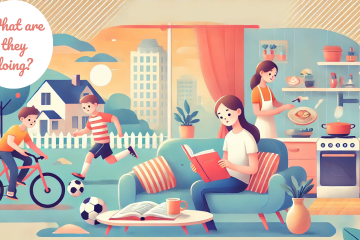
Görsel



4 yorum
Can Pars · Mart 3, 2023 10:30 am tarihinde
teşekkürler çok yardımcı oldunuz
zawazingo2 · Nisan 4, 2023 10:21 am tarihinde
tabi efendim canpars
Zamazingo · Mart 6, 2023 5:57 pm tarihinde
İçerik olarak gayet güzel olan bir site olmuş ve bunun yanında konular akılda kalıcı olması sağlanmış. Elinize sağlık
kivi · Nisan 29, 2023 11:24 am tarihinde
monday